Forecasting revenue is one of the most important financial skills every entrepreneur needs to master. Whether you are launching a startup, scaling an established company, or planning to Open a company in Hong Kong, understanding how much money your business is likely to generate helps you make smarter decisions, reduce risk, and plan for sustainable growth.
A revenue forecast is not just a spreadsheet exercise. It is a strategic tool that helps you predict future performance, allocate resources, attract investors, and avoid cash flow problems. Without it, businesses often operate blindly, relying on guesswork instead of data-driven planning.
In this guide, you will learn exactly how to forecast revenue step-by-step, what methods to use, common mistakes to avoid, and how to apply a simple free template to your own business.
What Is Revenue Forecasting?
Revenue forecasting is the process of estimating how much money your business will earn over a specific period of time, such as a month, quarter, or year.
It is based on historical data, market trends, pricing strategy, customer behavior, and sales projections. Unlike budgeting, which focuses on planned spending, revenue forecasting focuses purely on expected income.
For new businesses with no historical data, forecasting is still possible using assumptions such as market size, expected pricing, and conversion rates.
For entrepreneurs who Open a company in Hong Kong or any other global market, revenue forecasting is especially important because it helps align business expectations with real-world market conditions.
Why Revenue Forecasting Matters for Your Business
Revenue forecasting plays a critical role in business success because it influences nearly every financial decision.
It helps you determine whether your business idea is viable before investing heavily. It also helps you set realistic goals for sales teams and marketing campaigns.
Another major benefit is cash flow planning. Knowing when revenue is expected helps you plan expenses like salaries, rent, and inventory purchases.
Investors and banks also rely heavily on revenue forecasts when evaluating funding requests. A well-prepared forecast shows that you understand your business model and market potential.
If you are planning to Open a company in Hong Kong, having a solid revenue forecast can also help you establish credibility with local banks and business partners.
Key Elements of Revenue Forecasting
Before creating a forecast, you need to understand the main components that influence revenue.
The first is pricing. This determines how much money you earn per sale.
The second is sales volume. This represents how many units or services you expect to sell.
The third is customer demand. This includes market size, competition, and seasonal trends.
The fourth is conversion rate. This is the percentage of leads that actually become paying customers.
The fifth is growth rate, which estimates how your business will expand over time.
All these elements work together to create a realistic financial projection.
Methods of Revenue Forecasting
There are several ways to forecast revenue depending on the type and stage of your business.
One common method is the historical method. This uses past revenue data to predict future performance. It is most effective for established businesses with stable trends.
Another method is the market-based approach. This estimates revenue based on total market size and your expected market share. It is commonly used by startups.
The bottom-up approach is another powerful method. It calculates revenue based on individual units sold or customers acquired.
There is also the top-down approach, which starts with total market potential and narrows down to your business.
Most businesses use a combination of these methods for more accurate forecasting.
Step-by-Step Guide to Forecast Revenue
To build a reliable revenue forecast, you need a structured approach.
The first step is defining your sales channels. This could include online sales, retail stores, partnerships, or service contracts.
The second step is identifying your average selling price. This gives you a baseline for revenue per transaction.
The third step is estimating your customer volume. You can use website traffic, leads, or market data to make assumptions.
The fourth step is calculating conversion rates. This helps determine how many leads turn into paying customers.
The fifth step is projecting growth. This includes expected increases in traffic, customer base, or pricing adjustments.
Finally, multiply these variables together to calculate total expected revenue.
Simple Revenue Forecast Formula
The basic formula for revenue forecasting is:
Revenue = Number of Customers × Average Price per Customer
For more advanced forecasting, you can use:
Revenue = Leads × Conversion Rate × Average Purchase Value
These formulas help break down revenue into measurable components, making it easier to adjust assumptions and improve accuracy.
Example of Revenue Forecasting
Let’s assume you run an online business.
You expect 10,000 website visitors per month.
Your conversion rate is 2 percent.
Your average purchase value is $50.
First, calculate customers:
10,000 × 2% = 200 customers
Now calculate revenue:
200 × $50 = $10,000 monthly revenue
This simple example shows how small changes in conversion rates or pricing can significantly impact revenue.
Revenue Forecasting for New Businesses
For new businesses with no data, forecasting can feel challenging. However, you can still create realistic estimates using market research.
Start by analyzing competitors. Look at their pricing, customer base, and market positioning.
Next, estimate your target audience size. Use industry reports or online data sources.
Then, define your expected market share. Even capturing a small percentage of a large market can generate significant revenue.
For entrepreneurs planning to Open a company in Hong Kong, this step is particularly useful because the region offers access to both local and international markets.
Revenue Forecasting for Established Businesses
Established businesses have the advantage of historical data. This makes forecasting more accurate.
You can analyze past sales trends, seasonal fluctuations, and customer retention rates.
You can also segment revenue by product lines or services.
This helps identify which areas of the business are growing and which need improvement.
Historical forecasting also allows for scenario planning, such as best-case, worst-case, and expected-case projections.
Common Mistakes in Revenue Forecasting
One of the most common mistakes is overestimating sales. Many entrepreneurs assume rapid growth without considering market limitations.
Another mistake is ignoring seasonality. Many businesses experience fluctuations throughout the year.
Some businesses also fail to account for customer churn, which affects long-term revenue.
Using unrealistic conversion rates is another frequent error, especially in early-stage startups.
Finally, many businesses do not update forecasts regularly. A revenue forecast should be a living document, not a one-time calculation.
How to Improve Accuracy in Revenue Forecasting
To improve forecasting accuracy, always base assumptions on real data whenever possible.
Use conservative estimates rather than overly optimistic projections.
Track performance regularly and compare actual results with forecasts.
Adjust your model as you learn more about customer behavior.
You should also consider external factors such as economic conditions, competition, and industry trends.
Businesses that Open a company in Hong Kong often operate in dynamic international markets, making regular updates to forecasts even more important.
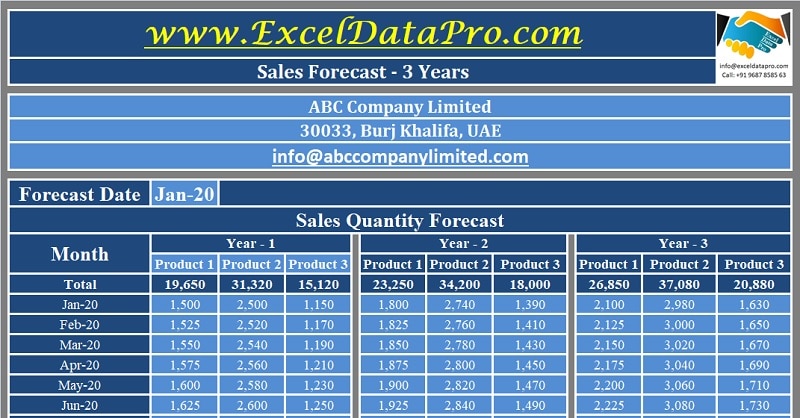
Free Revenue Forecast Template (Simple Structure)
You can use the following structure to build your own forecast.
Start with monthly time periods.
List expected leads or customers for each month.
Apply conversion rates to estimate actual customers.
Multiply by average revenue per customer.
Then calculate total monthly revenue.
Finally, sum all months to get annual projections.
This simple structure can be created in Excel or Google Sheets and customized based on your business model.
Scenario Planning in Revenue Forecasting
Scenario planning is an advanced forecasting technique that helps you prepare for uncertainty.
The optimistic scenario assumes higher growth, better conversion rates, and stronger demand.
The realistic scenario is based on expected performance using current data.
The pessimistic scenario accounts for slower growth or market challenges.
By preparing all three scenarios, you can make better strategic decisions and reduce financial risk.
How Revenue Forecasting Supports Business Growth
Revenue forecasting is not just about predicting income. It is a tool for strategic planning.
It helps you decide when to hire new employees, expand into new markets, or invest in marketing.
It also helps you manage cash flow more effectively.
For businesses planning to Open a company in Hong Kong, forecasting can guide decisions related to international expansion, pricing strategy, and operational scaling.
A strong forecast gives you confidence to take calculated risks while maintaining financial stability.
Conclusion
Revenue forecasting is a critical skill for any business owner. It provides clarity, direction, and control over financial planning.
By understanding key components like pricing, conversion rates, and customer volume, you can create realistic projections that guide decision-making.
Whether you are launching a startup or planning to Open a company in Hong Kong, having a reliable revenue forecast helps you reduce uncertainty and build a stronger, more scalable business.
FAQs About Revenue Forecasting
What is revenue forecasting in simple terms?
Revenue forecasting is the process of estimating how much money a business will earn in the future based on sales data, market trends, and business assumptions.
Why is revenue forecasting important for startups?
It helps startups understand their financial potential, plan expenses, and attract investors by showing expected future performance.
How often should revenue forecasts be updated?
Revenue forecasts should be updated regularly, usually monthly or quarterly, depending on how fast the business environment changes.
Can a business forecast revenue without historical data?
Yes, new businesses can use market research, competitor analysis, and assumptions about customer behavior to create forecasts.
What is the most accurate method of forecasting revenue?
The most accurate method usually combines historical data, market analysis, and bottom-up forecasting to create balanced projections.
How does revenue forecasting help with business expansion?
It helps businesses understand when they can afford to expand, hire staff, or invest in new markets based on expected income.
Does location affect revenue forecasting?
Yes, location impacts customer demand, pricing, and costs. For example, entrepreneurs who Open a company in Hong Kong may have different revenue expectations due to access to global markets and competitive business environments.
You should also read: TechAiTech