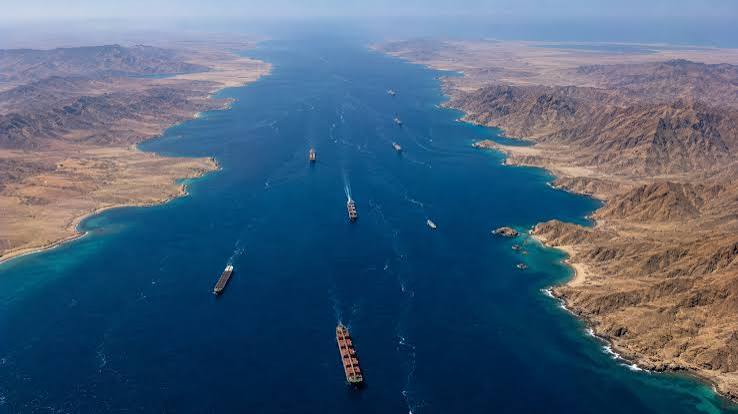
The Bab El Mandeb Strait is a narrow but exceptionally important waterway between the Arabian Peninsula and the Horn of Africa. It connects the Red Sea with the Gulf of Aden and the Arabian Sea, creating a vital maritime gateway between the Indian Ocean and the Mediterranean through the Suez Canal.
Although the strait is relatively small compared with the oceans surrounding it, its importance to international commerce is enormous. Oil tankers, container ships, bulk carriers, and other commercial vessels use this route to move goods and energy between Asia, Europe, the Middle East, and Africa.
In recent years, security tensions around Yemen have once again demonstrated how a crisis at Bab El Mandeb can affect shipping decisions, energy markets, insurance costs, and international trade.
What Is the Bab El Mandeb Strait?
Bab El Mandeb, also written as Bab al-Mandab, is a maritime passage located between Yemen on the Arabian side and Djibouti and Eritrea on the African side.
The name is commonly translated from Arabic as “Gate of Tears.” The historical name reflects the dangers associated with navigating the waterway and the difficult conditions faced by sailors in earlier centuries.
The strait links two major bodies of water:
- The Red Sea to the north
- The Gulf of Aden to the south
- The Arabian Sea beyond the Gulf of Aden
- The Indian Ocean further east
Its geographical position makes it a natural bridge between major commercial regions.
Where Is Bab El Mandeb Located?
The strait sits at the southern entrance of the Red Sea. Yemen lies on its eastern side, while Djibouti and Eritrea are located on the western side.
The island of Perim, also known as Mayyun, divides parts of the passage into separate navigational channels. This geographical structure has contributed to the strait’s strategic importance throughout history.
The waterway is relatively narrow at its tightest point, making it a classic example of a maritime chokepoint. The U.S. Energy Information Administration has described Bab El Mandeb as an important route for petroleum and natural gas shipments.
Why Is Bab El Mandeb So Important?
The biggest reason for the importance of Bab El Mandeb is its position on the global shipping route connecting the Indian Ocean to the Mediterranean Sea.
A vessel traveling from Asia or the Persian Gulf toward Europe can travel through the Arabian Sea, enter the Gulf of Aden, pass through Bab El Mandeb, cross the Red Sea, and then reach the Mediterranean through the Suez Canal.
This route can be significantly shorter than sailing around the southern tip of Africa.
The Suez Canal Connection
Bab El Mandeb cannot be viewed separately from the Suez Canal. Together, they form part of one of the world’s most important maritime corridors.
A ship traveling between Asia and Europe through the Suez route effectively depends on both gateways:
Indian Ocean → Gulf of Aden → Bab El Mandeb → Red Sea → Suez Canal → Mediterranean Sea
If shipping through Bab El Mandeb becomes unsafe or impractical, vessels may choose to bypass the entire Red Sea route.
The alternative is often a much longer voyage around the Cape of Good Hope in South Africa, adding considerable time, fuel consumption, and operating costs. EIA estimates that rerouting around the Cape can add roughly 15 days to some journeys between the Arabian Sea and Europe.
Bab El Mandeb and Global Trade
Bab El Mandeb is important not simply because ships pass through it, but because of what those ships carry.
The waterway has historically handled significant volumes of:
- Crude oil
- Refined petroleum products
- Containerized goods
- Industrial materials
- Consumer products
- Food commodities
- Other international cargo
The EIA estimated that approximately 4.2 million barrels per day of crude oil, condensate, and petroleum products moved through Bab El Mandeb during the first half of 2025. That was substantially below the 9.3 million barrels per day recorded in 2023, reflecting the impact of security concerns and rerouting.
These figures demonstrate an important point: when security conditions change, shipping patterns can change rapidly as well.
How Does It Affect European Trade?
Europe receives substantial quantities of goods and energy from Asia and the Middle East. The Red Sea-Suez corridor provides one of the most efficient maritime connections between these regions.
When ships avoid Bab El Mandeb, the additional distance around Africa can increase:
- Fuel consumption
- Crew and operating expenses
- Voyage duration
- Insurance premiums
- Freight rates
- Delivery times
As a result, an event thousands of kilometers away from European consumers can eventually influence the cost and availability of imported products.
Bab El Mandeb and Energy Security
The strait has a particularly important role in the movement of energy.
Oil produced in the Persian Gulf often travels through a series of strategic maritime chokepoints before reaching customers in Europe and elsewhere. Bab El Mandeb is one of the links in that chain.
The EIA reports that oil flows through Bab El Mandeb reached 9.3 million barrels per day in 2023, before falling to approximately 4.1 million barrels per day in 2024 and 4.2 million barrels per day in the first half of 2025.
Why Oil Tankers Care About the Strait
For an oil tanker, taking a longer route around Africa means more days at sea. That can translate into higher fuel costs and lower vessel availability.
When large numbers of vessels are rerouted simultaneously, the effect can extend beyond individual shipping companies.
Longer voyages can reduce the effective supply of available ships and increase transportation costs, which can eventually influence commodity prices.
Security Challenges Around Bab El Mandeb
The strategic importance of Bab El Mandeb also makes it vulnerable to geopolitical tensions.
Yemen’s prolonged conflict has created significant security concerns around the Red Sea and Gulf of Aden. Attacks and threats against commercial shipping have encouraged some shipping companies to avoid the region.
In August 2026, renewed attacks in the region again highlighted the vulnerability of commercial vessels using the strait. Reuters reported that an Egyptian-owned cargo vessel was attacked near Bab El Mandeb, with crew members killed and others injured.
Such incidents can have consequences beyond the immediate damage to a ship.
Why Shipping Companies Reroute
Commercial shipping companies generally prioritize the safety of their vessels and crews. If the perceived risk becomes too high, operators can choose a longer route even when it is considerably more expensive.
The result can be a major change in global shipping patterns.
The EIA noted that attacks on commercial shipping beginning in late 2023 caused some vessels to abandon the Red Sea route and travel around the Cape of Good Hope instead.
What Happens If Bab El Mandeb Is Blocked?
A complete closure would not necessarily stop global trade, but it could create significant disruption.
Ships could potentially travel around Africa, but that alternative is much longer.
For many routes, avoiding Bab El Mandeb means avoiding the Suez Canal as well. This can add thousands of nautical miles to a voyage.
Economic Effects of a Disruption
A prolonged disruption could contribute to:
- Higher freight costs
- Increased fuel consumption
- More expensive marine insurance
- Longer delivery schedules
- Higher transportation costs
- Pressure on energy markets
- Supply-chain delays
The EIA has emphasized that maritime chokepoints are important because even temporary disruptions can cause supply delays and higher transportation costs.
The Historical Importance of Bab El Mandeb
Bab El Mandeb has been strategically important for centuries because of its location between Africa, Arabia, and the Indian Ocean.
Long before modern container ships and oil tankers, merchants used the Red Sea and surrounding waters to connect commercial centers in Africa, Arabia, India, and the Mediterranean world.
The opening of the Suez Canal in 1869 dramatically increased the importance of the Red Sea maritime corridor. Ships could travel between the Mediterranean and Indian Ocean without sailing around Africa.
That development transformed Bab El Mandeb into an even more important gateway.
Bab El Mandeb in Modern Geopolitics
Today, the strait sits at the intersection of several major geopolitical interests.
Its surrounding region includes:
- Yemen
- Djibouti
- Eritrea
- Saudi Arabia
- Egypt
- The wider Horn of Africa
- The Gulf of Aden
Major international powers also have strategic interests in maintaining safe maritime transportation through the region.
Djibouti, in particular, has become an important location for international military and security operations because of its proximity to Bab El Mandeb and other major maritime routes.
Why Major Powers Watch the Strait
A disruption at Bab El Mandeb can affect international shipping far beyond the immediate region.
For countries dependent on imported energy or manufactured goods, disruption can create economic uncertainty. For shipping companies, the central concern is whether the savings from the shorter Suez route justify the security risk.
That makes the strait both a commercial asset and a geopolitical pressure point.
Bab El Mandeb vs. Strait of Hormuz
Bab El Mandeb and the Strait of Hormuz are sometimes discussed together because both are major maritime chokepoints.
However, they perform different geographical functions.
Strait of Hormuz: Connects the Persian Gulf with the Gulf of Oman and Arabian Sea.
Bab El Mandeb: Connects the Red Sea with the Gulf of Aden and provides access toward the Indian Ocean.
For some energy shipments traveling from the Persian Gulf toward Europe through the Suez Canal, both chokepoints can matter.
This creates a chain of strategic waterways in which disruption at one point can influence the entire journey.
The Future of Bab El Mandeb
The importance of Bab El Mandeb is unlikely to disappear.
Global trade continues to depend heavily on maritime transportation, while Europe, Asia, Africa, and the Middle East remain deeply connected through shipping.
However, future shipping patterns will depend heavily on security conditions.
If the region becomes safer, more vessels may return to the Red Sea and Suez route. If attacks and political tensions continue, shipping companies may continue using longer routes around Africa.
The difference can amount to billions of dollars in additional transportation costs over time.
Conclusion
The Bab El Mandeb Strait may look small on a world map, but its influence is enormous. Positioned between Yemen and the Horn of Africa, it controls access between the Red Sea and the Indian Ocean and forms a critical part of the maritime route connecting Asia, the Middle East, and Europe.
Its importance comes from geography. Its narrow waters create a chokepoint through which major volumes of commercial and energy traffic must pass when using the Red Sea and Suez Canal route.
Security problems around Yemen have shown just how quickly events near Bab El Mandeb can affect global shipping. When vessels are forced to take longer routes around Africa, fuel use, voyage times, insurance costs, and freight prices can all rise.
For that reason, Bab El Mandeb is more than a geographical feature. It is a strategic gateway to global trade, an important energy corridor, and one of the maritime locations that can influence the world’s economy far beyond the shores of the Red Sea.