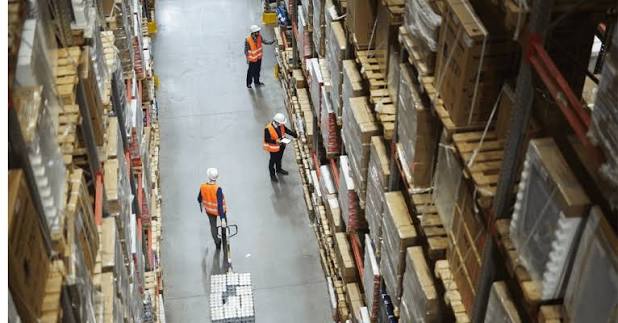
Efficient material handling plays a vital role in warehouse management and industrial production. The way goods are received, stored, transported and prepared for dispatch directly affects operating costs, productivity and workplace safety. When these processes are poorly organised, employees spend more time moving materials than completing productive tasks, while unnecessary handling increases the risk of delays and damage.
Improving material handling efficiency does not always require major investments in automation. A more practical approach often involves reviewing existing workflows, identifying bottlenecks and introducing equipment that makes everyday operations easier. Even relatively small changes to warehouse layouts or workstation design can deliver noticeable improvements.
Identify Bottlenecks in Material Handling Processes
Before making changes, businesses need to understand where inefficiencies occur. Materials may travel unnecessarily long distances between storage areas and production lines, while employees might repeatedly lift or reposition the same goods. Such activities consume valuable working time without contributing directly to the finished product.
Observing daily operations is often more revealing than relying exclusively on productivity reports. Managers should examine how frequently goods are handled, where delays occur and whether equipment is readily available when needed. Identifying these problems makes it easier to distinguish between issues that require new equipment and those that can be resolved through better organisation.
Optimise Warehouse Layout and Storage Organisation
Warehouse layout has a considerable influence on material handling efficiency. When frequently used products are stored far from picking stations or production areas, employees must cover greater distances throughout their shifts. Positioning high-demand goods closer to their point of use can reduce unnecessary movement and improve workflow consistency.
Transport routes also deserve careful attention. Forklifts, pallet trucks and pedestrians often share limited space, creating congestion and potential safety hazards. Clearly defined routes, accessible storage locations and appropriately sized aisles help materials move more smoothly through the facility. Storage arrangements should also account for product weight, dimensions and handling frequency rather than focusing solely on maximising capacity.
Invest in Appropriate Lifting and Handling Equipment
Selecting suitable handling equipment can make a substantial difference to operational efficiency, particularly in facilities dealing with heavy or bulky materials. While forklifts and pallet trucks are effective for transporting goods horizontally, other tasks require equipment that adjusts loads to an appropriate working height. Without mechanical assistance, employees may need to bend, stretch or manually reposition products repeatedly.
Hydraulic lifting tables provide a practical solution for many of these applications. For example, a height-adjustable platform can keep palletised goods within comfortable reach during loading or unloading, reducing awkward movements as the load changes. Manufacturers such as Translyft specialise in industrial lifting solutions designed for applications involving material handling, production processes and warehouse operations.
Equipment selection should reflect actual working conditions, including load capacity, lifting height, platform dimensions and operating frequency. An appropriately specified solution can improve workflow efficiency while reducing the physical demands placed on employees.
Improve Ergonomics and Workplace Safety
Material handling efficiency is closely connected to workplace ergonomics. Repetitive lifting, awkward postures and unnecessary reaching can contribute to employee fatigue and musculoskeletal problems. These factors may also affect productivity, especially during physically demanding shifts.
Designing workstations around the tasks employees perform helps reduce these risks. Adjustable working heights, accessible materials and mechanical lifting assistance can make repetitive operations more comfortable and consistent. Ergonomic improvements are particularly valuable when workers handle similar products throughout the day, as even minor reductions in physical effort can make demanding tasks easier to sustain.
Introduce Automation Where It Adds Value
Automation can improve material flow in facilities with repetitive processes and predictable transport requirements. Conveyor systems, automated storage solutions and autonomous mobile robots can reduce manual transportation while supporting more consistent operations. However, their effectiveness depends on how well they integrate with existing workflows.
Not every bottleneck requires sophisticated technology. In some situations, reorganising storage locations or introducing a lifting table may be more economical than installing a fully automated system. Businesses should therefore evaluate the cause of each inefficiency before choosing a solution, considering both implementation costs and long-term operational benefits.
Monitor Performance and Maintain Equipment
Improving efficiency is an ongoing process rather than a one-time project. Monitoring indicators such as material transfer times, equipment downtime, order processing speed and product damage can help businesses determine whether changes are producing the expected results. Comparing performance before and after an improvement provides a clearer basis for future investment decisions.
Preventive maintenance is equally important because unexpected equipment failures can disrupt entire production or distribution processes. Regular servicing, appropriate inspections and employee training help keep handling equipment reliable and support safe operation.
Creating a More Efficient Material Handling System
Effective material handling depends on how well warehouse layouts, equipment and working practices complement one another. Businesses that focus on reducing unnecessary movements, improving load positioning and maintaining reliable workflows can achieve meaningful productivity gains without introducing unnecessary complexity.
The most sustainable improvements come from choosing solutions that address specific operational problems. With better organisation, suitable lifting equipment and continuous performance monitoring, warehouses and production facilities can operate more efficiently while providing safer working conditions.