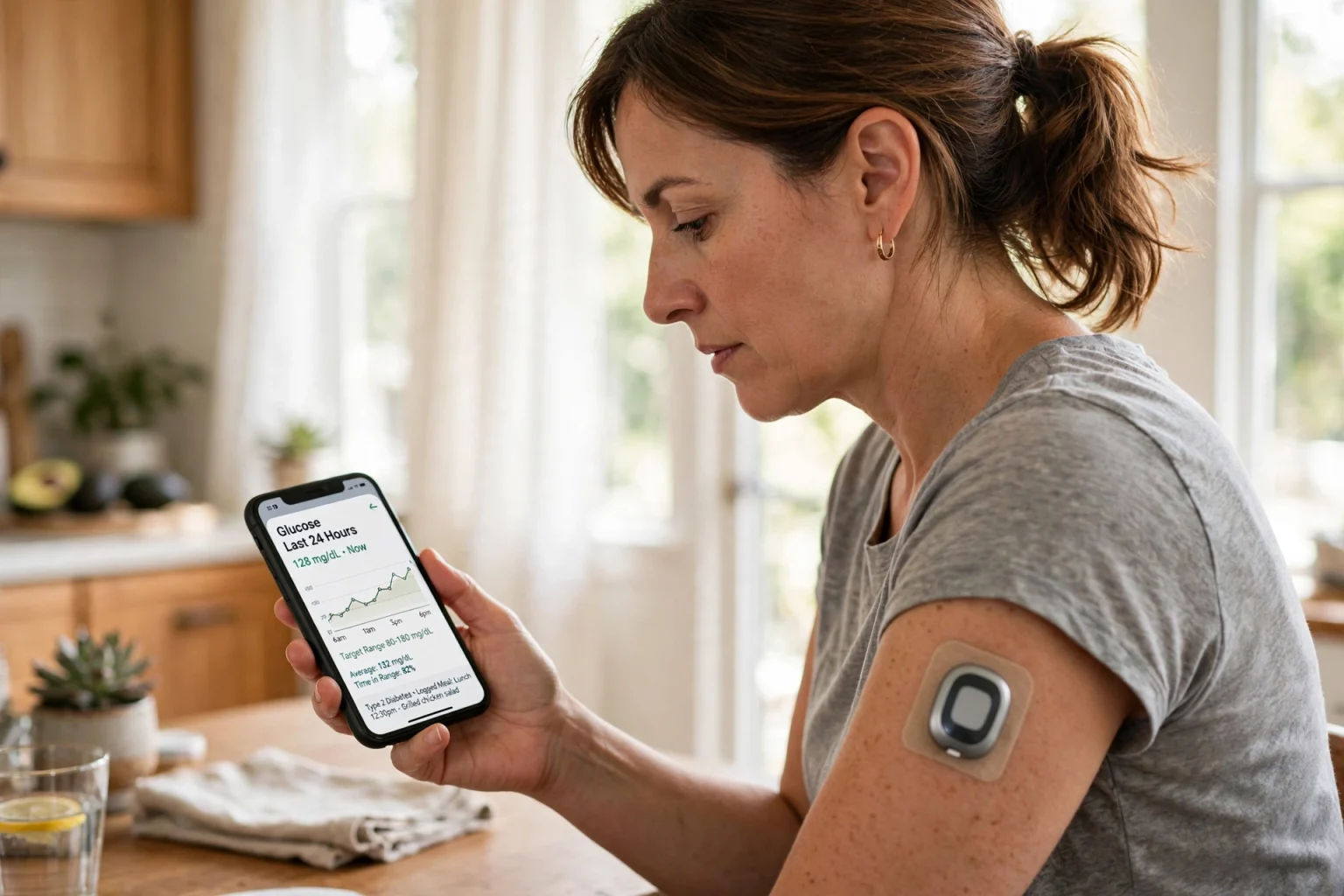
Continuous glucose monitors have transformed life for many people who use insulin. Now the largest clinical trial of its kind, published in the New England Journal of Medicine, suggests the small wearable sensors may help a far larger group: adults with type 2 diabetes who do not use insulin at all. Participants wearing the devices spent approximately five more hours each day with their blood sugar in the target range, a gain researchers describe as clinically meaningful for long-term health.
What the trial actually found
The study is notable first for its scale. Trials of glucose monitoring have historically concentrated on people with type 1 diabetes or on insulin-treated type 2 diabetes, leaving the much bigger population of people managing type 2 diabetes with diet, activity and oral medication comparatively unstudied. This trial recruited that overlooked group and followed them long enough to measure not just snapshots, but time in range: the share of the day spent between the blood sugar levels guidelines recommend. Five extra hours a day in that zone, sustained over months, is the kind of difference that compounds, because complications of diabetes, from eye and kidney damage to cardiovascular disease, track closely with cumulative exposure to high blood sugar.
Just as important is what the monitors appear to change: behaviour. A sensor that reports glucose every few minutes turns abstract advice into immediate feedback. Wearers can see, in near real time, what a particular meal, a short walk after dinner, or a poor night of sleep does to their readings, and adjust while the information is still useful. Clinicians involved in this field often describe the device less as a measuring tool and more as a teaching tool, one that personalises guidance no leaflet can match.
Why this matters beyond the sensor
Type 2 diabetes is one of the defining chronic diseases of the era, and its management has traditionally relied on a blood test every few months that averages the past quarter into a single number. That average, known as HbA1c, remains valuable, but it hides the daily peaks and troughs that patients actually live with. Continuous data fills in the picture between appointments, for patients and doctors alike. The New England Journal of Medicine, which published the trial, is among the most selective medical journals in the world, and publication there signals that the evidence has survived unusually rigorous scrutiny.
Guideline bodies are paying attention. The American Diabetes Association already recommends continuous monitoring for many people on insulin, and results like these will strengthen the case for widening access further. That, in turn, raises the practical questions that decide whether research becomes routine care: will insurers pay, can clinics handle the data, and can prices keep falling as the technology spreads?
The caveats worth keeping
Enthusiasm should come with the usual cautions. A sensor is only useful if someone wears it consistently and knows how to respond to its readings; alarms and data overload can overwhelm some users, and the trial population was, by definition, willing to take part in a study. Cost remains a real barrier in many health systems, and five hours of improved time in range, while significant, is a surrogate measure: the ultimate test is whether it translates into fewer complications over years, which only longer follow-up can prove. Nor do monitors replace the foundations of care. Nutrition, movement, sleep, medication and regular clinical review still do the heavy lifting; the sensor mainly shows whether that lifting is working.
There is also a human question about who benefits first. New health technology has a habit of reaching the already well-served before everyone else, a pattern visible across the system, much as our coverage of global markets and central banks shows economic benefits arriving unevenly. Advocates argue that people with the least access to specialist diabetes care may have the most to gain from a device that brings feedback into the home, provided it is affordable and properly supported.
What patients should do now
For readers living with type 2 diabetes, the sensible response is a conversation, not a purchase. Ask your clinician whether continuous monitoring fits your situation, what it would cost in your system, and what you would do differently with the data. If you do try a sensor, treat the first fortnight as an experiment: note meals, walks and sleep alongside the readings, and look for your own patterns rather than chasing every spike. Used that way, the technology’s promise is not the graph itself but the understanding behind it.
The broader lesson of the trial is quietly hopeful. Diabetes care has long asked patients to manage a condition they could barely see. Giving millions more of them a clear, continuous view of their own blood sugar, and proving in a major trial that the view improves control by hours a day, is a genuine step forward. The task now is making sure the step reaches the people it was taken for.