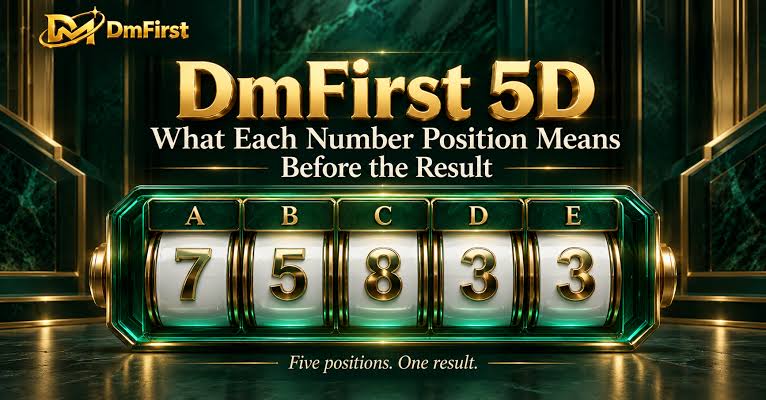
Five digits can be read as a single number or as five separate positions. In a result table that distinction matters. Jai Club’s guide describes 5D with positions A through E. A specific example should say whether a rule refers to one position, a combined value or a category applied to the row.
Try an invented row
Write 0, 4, 2, 8 and 1 under A, B, C, D and E. The first position is zero. Writing the row as the number 4281 drops that first character and obscures which digit belongs to each position. This exercise illustrates how a record can lose information when its format changes. It is not an example of a real game’s settlement rules.
Browse yono games to distinguish app names from the names of modes mentioned in a listing. A 5D explanation should identify the product and the screen it covers. A result example copied from a different guide may use familiar letters without assigning them the same meaning.
Read the summary separately
A display may place a combined value next to the individual positions. Check the rule that defines that value. Do not assume it is a simple sum or that it concerns all positions merely because it appears near them. If the guide gives an example, see whether it states the calculation and names the inputs.
Use colour trading games for orientation on formats such as 5D and WinGo. The practical comparison is the shape of the information: which labels describe a position, which describe the round and which need a definition from the operator.
Keep round numbers intact
When saving a result for reference, keep the mode and round identifier alongside the ordered row. Results from a different timer or another version should be separate records. This matters even when the same sequence happens to appear twice. A matching row doesn’t establish that it refers to the same event.
A plain-text note can be enough: round number, mode, A through E and the source of the definitions. Keep any copied digits in the original order. If your spreadsheet strips a leading zero, enter the identifier as text rather than letting software turn it into a number.
Where interpretation stops
Knowing what an ordered row means does not reveal the next row. A history panel can help you look up a finished round, but it does not establish future results. Use the guide to check definitions and preserve details, not to turn a series of past rows into a guarantee. A well-kept record answers a narrow question: what was shown for this round, and what did its labels mean?