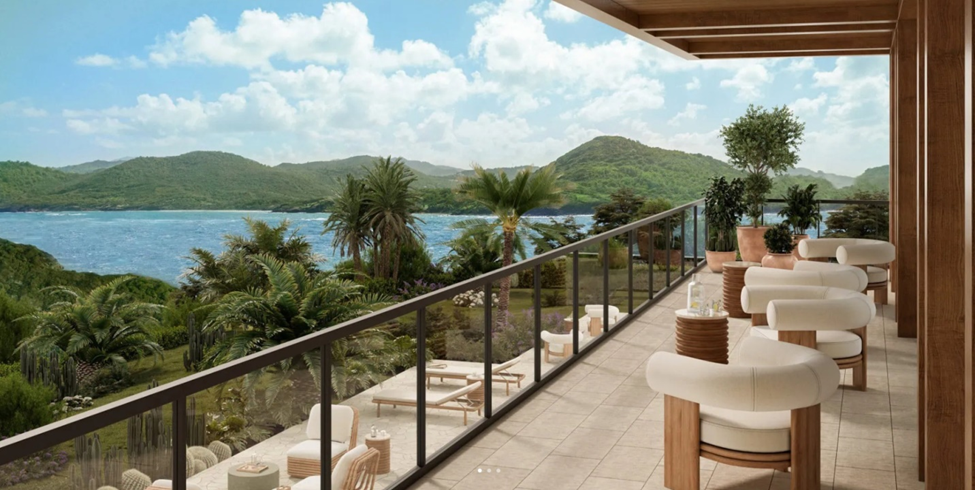
A golf club rarely sells what it already has. It sells what the fairway, the clubhouse terrace, and the eighteenth green will feel like once the irrigation lines are buried and the bunkers are raked for the first time. A buyer is asked to put down a deposit on a homesite next to a course that has not been grassed yet. A member roster is asked to vote yes on a clubhouse rebuild based on a set of drawings. None of these people are buying grass. They are buying a version of their own future life, and a floor plan will not get them there. That gap is exactly why golf has quietly become one of the most active users of architectural rendering and 3D visualization in real estate.
RenderArtStudio.com have spent the last several years building visualization for developers like The Cabot Collection and luxury golf clubs who are all, in different ways, wrestling with the same problem. They have a real estate asset or a membership product that will be extraordinary once it exists, and a very short window in which to convince someone to commit before it does. That window is where a rendering studio earns its fee, and it is also where a lot of golf marketing budget quietly goes to waste on visuals that are accurate but forgettable.
Three Golf Markets, Three Reasons To Render
Golf real estate is not one market, and each segment leans on visualization differently. New-build communities sell home lots and memberships years before the course is finished, so a rendering is often the only visual evidence a buyer has that the promise is real. Established private clubs going through a renovation depend on visualization for a different reason: members are voting to fund the project themselves, and getting a room full of people to approve spending their own money on a plan they cannot picture is the hardest part of any capital campaign. International resort buyers may be the most visualization-dependent group of all, since many purchase from another country entirely, sometimes without ever walking the course. Closing that trust gap through a screen takes more than a pretty picture. It takes a rendering built with real understanding of the site, the light, and the buyer.
Why A Course Flyover Will Not Sell A Homesite
Every developer eventually commissions the same three assets: an aerial course rendering, a hole-by-hole flyover, and a clubhouse exterior at dusk. These are useful, and also close to invisible to a buyer who has already seen a dozen competing developments this month. Photorealistic rendering is the baseline now, not the differentiator. What moves someone from browsing to booking a visit is whether they can picture themselves inside the scene, not admiring it from above. A bird’s-eye-view rendering shows the shape of a development with holes placements during golden hours. It does not show what it feels like to sit outside with a coffee while mist lifts off the fairway, or what a Sunday looks like when three generations of one family are on the terrace after a round. The golf course flyover shows the marvellous landscape around, nature and experience of its uniqueness, while dusk view nearby the clubhouse gives the social vibe and experience of community.
The Storytelling Layer That Separates A Rendering From A Sale
An architectural rendering answers “what will this look like.” A lifestyle rendering answers the harder question: what will it feel like to live this. That second question is the one driving a membership decision or a home purchase. In practice, this means clubhouse interiors built around a moment rather than a room, aerial renderings that frame the course as part of a walkable community rather than an isolated amenity, and wellness or amenity visualization for the parts of a modern club that have nothing to do with golf but often close the sale for a buyer’s spouse or family. None of this replaces accuracy. The lighting, materials, and proportions still have to be correct, because a buyer who visits the actual site after seeing an inflated rendering will feel misled. The storytelling sits on top of accuracy. It never replaces it.
Matching The Golf Course Rendering Strategy To The Project
| Golf Project Type | Who Is Deciding | Visualization Priority |
| New-Build Golf Community | Buyer purchasing sight unseen | Lot-specific exterior renderings tied to real sightlines |
| Private Club Renovation | Members voting on an assessment | Interior renderings shown in use, before-and-after comparisons |
| International Resort Living | Overseas buyer comparing options remotely | Site-specific storytelling renders with seasonal light |
What Members Remember Ten Years Later
Ask a member what made them join, and almost nobody mentions the course rating or the square footage of the fitness center. They describe a moment: dinner with friends or business partners on a terrace that did not exist yet when they signed. That is the real argument for treating golf club marketing as a storytelling discipline rather than a documentation exercise. Before a course is grown in, a rendering is the only thing standing between a buyer’s imagination and an empty field.
The rendering studios like RenderArtStudio.com that understand this are not really selling images of holes, grass and clubhouses. They are giving people a believable rehearsal of a life they have not lived yet, rendered carefully enough that saying yes feels less like a leap of faith and more like recognizing something they already wanted.