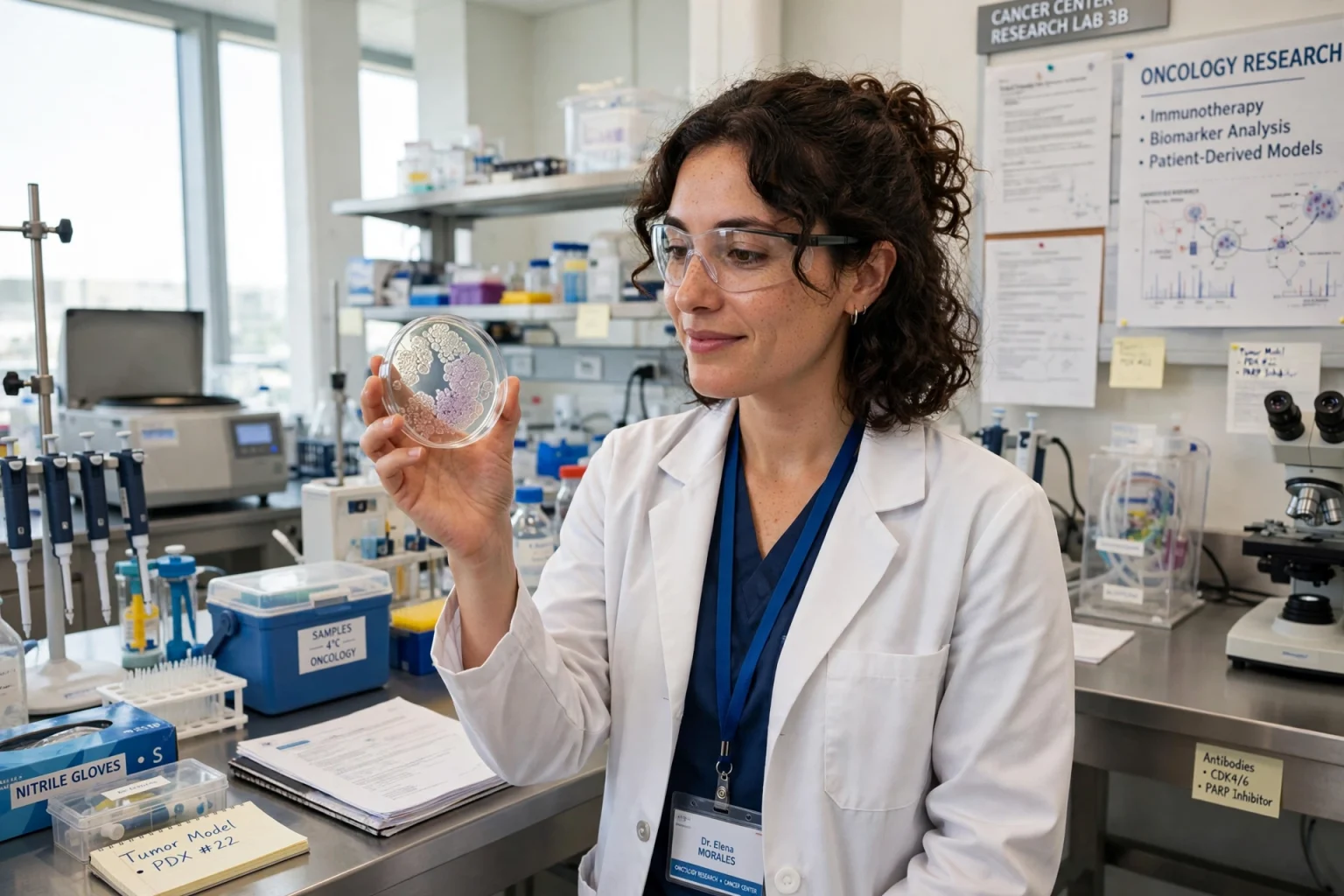
For patients facing ovarian cancer, a disease that too often returns after treatment, researchers have reported a development that offers a measure of hope — carefully qualified, but real. A phase 1 trial published in Nature Medicine found that a personalised vaccine, NeoVax, given with the immunotherapy nivolumab, was feasible to produce and had an acceptable safety profile in patients with platinum-sensitive disease.
The trial’s purpose was to test safety and practicality, not effectiveness. Its findings do not show that the vaccine prevents recurrence or extends life, and specialists emphasise that larger trials must answer those questions before any wider use.
A vaccine as individual as the disease
No two tumours mutate in exactly the same way, and NeoVax exploits that fact. Scientists sequence each patient’s tumour to find neoantigens — abnormal protein fragments unique to the cancer — then predict which ones the immune system will recognise best and manufacture a vaccine containing up to 20 of them.
Nivolumab supports the strategy by blocking a checkpoint that cancers use to blunt immune attack. Immune monitoring during the study indicated that patients responded to the vaccine’s targets, consistent with the treatment working as designed at the biological level.
Why feasibility headlines matter worldwide
Personalised therapies ask health systems everywhere to do something unfamiliar: manufacture a distinct product for every patient, on a deadline set by their illness. Showing that the full chain — sequencing, prediction, production, delivery — can operate inside a clinical trial is the step that turns a laboratory concept into a candidate therapy.
The pattern is familiar across modern medicine, from tailored immunotherapy to the wearable technology examined in our report on glucose monitors in type 2 diabetes care: individual data, gathered carefully, is reshaping treatments once designed for the average patient.
Hope, held to account
Ovarian cancer’s record demands honesty about timelines. Randomised trials, long follow-up and solutions to manufacturing cost all stand between this result and routine care — a journey measured in years, with no guarantee of success.
What the study does establish, in the researchers’ own restrained language, is that a vaccine built for one patient at a time can be made, safely combined with an established immunotherapy, and tested properly. For a field built on incremental progress, that is a foundation worth reporting — and worth building on.
What patients around the world should take from this
For patients and families reading about this trial far from the centres where it was conducted, the practical position needs stating plainly. The vaccine is experimental and available only through clinical trials, which recruit at a limited number of specialist hospitals and apply strict eligibility rules. No regulator has approved it, no health system offers it routinely, and the researchers behind it would be the first to caution against travelling or paying for unproven imitations.
What patients can legitimately take from the report is the direction of travel. Ovarian cancer care is slowly acquiring the tools of precision medicine — genomic profiling, targeted drugs and now personalised immunotherapy — that have already changed the outlook in some other cancers. A feasibility success in a phase 1 trial is one of the waypoints on that road, noteworthy precisely because so many promising ideas fail to clear it.
Hope, in this context, is best understood as a discipline: optimism disciplined by evidence, and evidence reported in full, including its limits. This study withstands that treatment. It shows a vaccine built from a patient’s own tumour can be manufactured and given safely alongside modern immunotherapy — and it leaves the decisive questions, honourably, to the trials that come next.
There is, finally, a human detail behind the statistics. Every vaccine in this trial began as tissue from a woman who agreed, in the middle of her own treatment, to contribute samples and time to research whose benefits — if they come at all — will mostly be felt by patients she will never meet. Trials are often described in the language of endpoints and cohorts. They are also, always, acts of generosity, and the progress reported here rests on them.