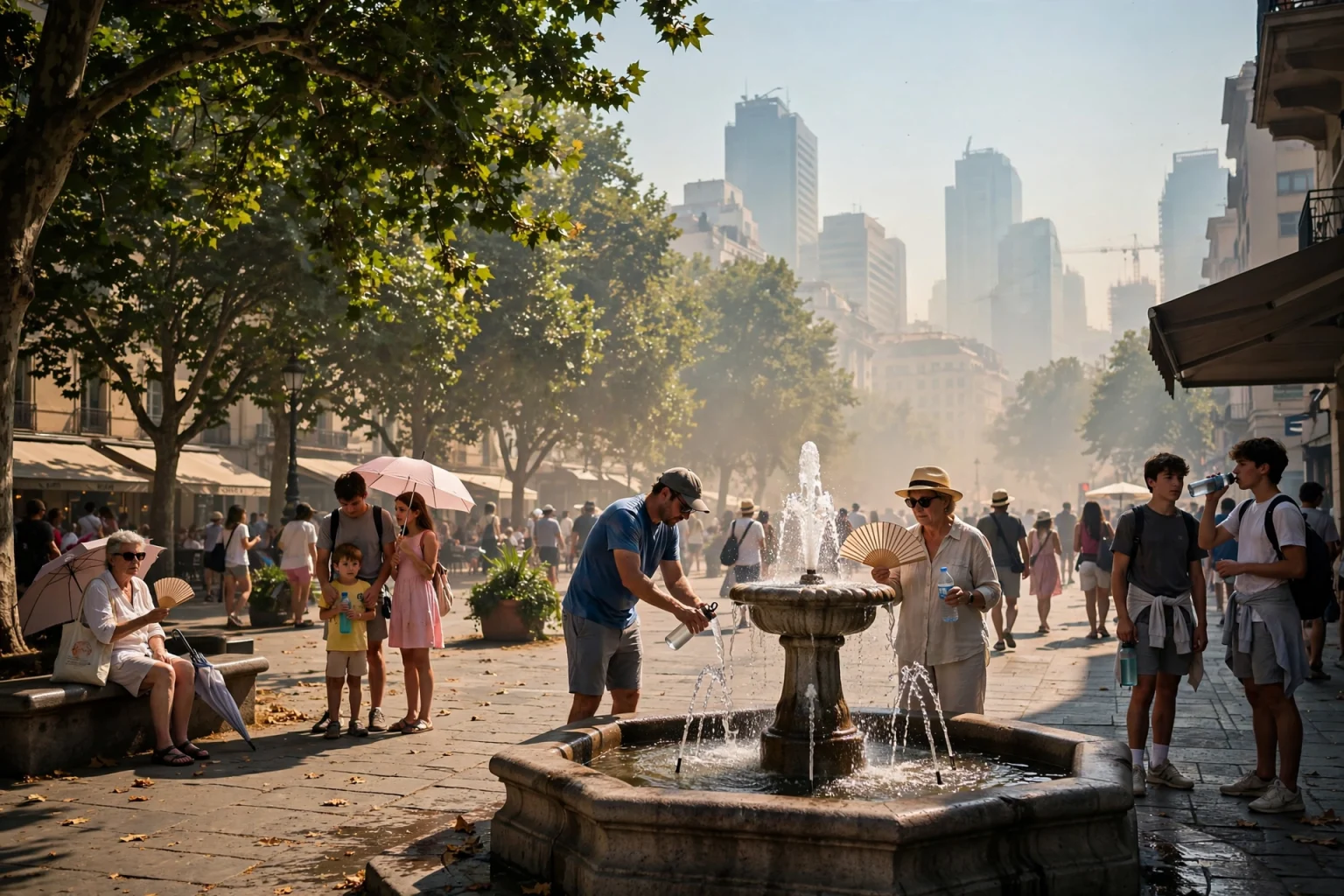
When the temperature in a major city climbs past 40 degrees Celsius and stays there for days, the problem stops being weather and becomes logistics. Roads soften, power grids strain, hospital wards fill with heatstroke cases, and the people least able to escape the heat — outdoor workers, the elderly, residents of top-floor flats — face the greatest danger. Around the world, city governments have quietly accepted that extreme heat is now a permanent feature of summer, and they are rewriting their playbooks accordingly.
Heat is the deadliest weather on Earth
Floods and storms dominate the headlines, but heatwaves kill more people than any other weather event. The World Health Organization notes that heat stress is the leading cause of weather-related death, and that the number of people exposed to extreme heat is growing with urbanisation and climate change. The danger is amplified in cities, where concrete and asphalt absorb the sun all day and radiate it back all night — the so-called urban heat island effect, which can leave dense neighbourhoods several degrees hotter than nearby suburbs.
What the new playbooks look like
The most advanced cities now treat heat like they treat snowstorms or floods: as a forecastable emergency with a named official in charge. Several European and Asian capitals have appointed chief heat officers whose job is to coordinate the response before the thermometer peaks. Typical measures include opening air-conditioned cooling centres in libraries and community halls, extending public pool hours, sending text-message alerts to registered elderly residents, and requiring employers to shift outdoor work to early morning.
Trees, paint and water
Longer-term fixes are reshaping the urban landscape itself. Planners are planting street trees at a scale not seen for decades, because a mature tree canopy can cut street-level temperatures dramatically. Light-coloured “cool roofs” and reflective pavements bounce sunlight back instead of storing it. Some cities are restoring urban wetlands and fountains, while others have mapped their hottest neighbourhoods flat-by-flat so that planting and retrofitting money goes where the risk is highest rather than where it is most visible.
The inequality problem
Heat does not fall evenly. Wealthier districts tend to have more trees, larger homes and air conditioning; poorer districts have more asphalt, more overcrowding and more residents whose jobs keep them outdoors. That is why the newest heat plans are written as public-health documents as much as climate documents, with home-visiting programmes for isolated elderly people and subsidies for insulation and cooling in social housing. As our coverage of how technology reshapes daily life often shows — from city services to the next generation of online entertainment — the benefits of adaptation, like the benefits of technology, depend on who they reach first.
What residents can do now
Individual preparation still matters. Health agencies advise knowing the symptoms of heat exhaustion — dizziness, nausea, rapid pulse — and treating them early with shade, water and rest. Checking on older neighbours during a heatwave saves lives every summer. Keeping curtains closed on sun-facing windows, cooking less during peak heat, and knowing the location of the nearest cooling centre are small steps that make a measurable difference when a heatwave settles in for a week.
The bottom line
Extreme summers are no longer freak events; they are the planning baseline. The cities faring best are the ones that stopped treating heat as a surprise and started treating it as infrastructure — staffed, budgeted and rehearsed. The rest are learning, one brutal August at a time.
Early warnings are getting smarter
Forecasting has become the backbone of every serious heat plan. Modern warning systems no longer trigger on temperature alone; they combine humidity, nighttime minimums and the length of the hot spell into a health-impact score, because it is the hot nights — when bodies cannot recover — that push hospital admissions sharply upward. Some cities now issue neighbourhood-level alerts three to five days ahead, giving hospitals time to staff up, utilities time to prepare for peak electricity demand, and care services time to check on the residents most at risk. The lesson cities keep relearning is simple: the earlier the warning, the cheaper and more effective the response.